School of thought · from the 1970s
Monetarism and supply-side economics
Fight inflation, roll back the state, create incentives for supply and investment.
Monetarism and supply-side economics were the answer to the inflation crisis of the 1970s. They shifted the focus from demand to money and to the conditions for production and investment. Central bank interest rate decisions, debates about tax cuts and deregulation, the independence of the ECB: none of this can be understood without this school. For consultants, it matters most when interest rates and inflation overturn the assumptions in the business case.
01How the idea emerged
In the 1970s, something happened that the Keynesian textbook considered unlikely: inflation and unemployment rose at the same time. The oil price shocks of 1973 and 1979 drove prices up, and the economy stagnated. In the US, inflation at times reached almost 15 per cent in 1980. More government demand would have made inflation worse.
Milton Friedman had already issued warnings in the 1960s. In 1963, with Anna Schwartz, he showed in “A Monetary History of the United States” that the US central bank had massively worsened the Great Depression through a shrinking money supply. His core thesis: in the long run, inflation is a monetary phenomenon. If the money supply grows faster than the economy, prices rise. And the attempt to lower unemployment permanently through inflation fails, because people adjust their expectations.
At the same time, supply-side economics emerged. Its proponents argued that growth is not limited by demand but by the conditions for work, investment and entrepreneurship: taxes, regulation, market access. Friedrich August von Hayek provided the broader philosophical background, with his warning against state planning and his emphasis on prices as an information system.
The political breakthrough came between 1979 and 1982. Paul Volcker took over the US central bank and broke inflation with extremely high interest rates. Margaret Thatcher became British Prime Minister, Ronald Reagan US President. In Germany, the Lambsdorff paper of 1982 led to the collapse of the coalition between the SPD and FDP and to the Kohl government.
“Only a crisis — actual or perceived — produces real change.”
Milton Friedman, 1982 · Source and meaning
02Timeline
- 1944
Hayek publishes “The Road to Serfdom”.
- 1963
Friedman and Schwartz: “A Monetary History of the United States”.
- 1968
Friedman’s address on the “natural rate of unemployment” is published.
- 1973
First oil price shock, end of the system of fixed exchange rates.
- 1974
The Bundesbank becomes the first central bank to announce a money supply target (for 1975).
- 1979
Volcker becomes Fed chair, Thatcher becomes Prime Minister.
- 1981
Reagan cuts the top rate of income tax, and US policy rates reach around 20 per cent.
- 1982
Lambsdorff paper, change of government in Bonn.
- 1984–1986
Major privatisations in Britain, including British Telecom and British Gas.
- 1998
Launch of the ECB, modelled on the independent Bundesbank.
- 2022
Inflation returns, and central banks raise interest rates faster than they have in decades.
03How it works
The foundation of monetarism is the quantity equation: the money supply times the velocity of circulation equals the price level times real economic output. If velocity is reasonably stable and the money supply grows faster than the real economy, prices rise. Friedman concluded from this that there should be a rule: the central bank should let the money supply grow steadily at a fixed rate instead of actively steering the business cycle.
Central to this is the natural rate of unemployment. In the short run, an expansionary policy can lower unemployment, because wages and expectations lag behind. As soon as people price in the higher inflation, unemployment returns to its old level, only with higher inflation. Employment cannot be bought permanently this way.
This explains the importance of credibility. A central bank whose inflation target nobody believes has to raise interest rates much more sharply than one that people trust. That is why central bank independence became the norm: central banks should not be able to cut interest rates ahead of elections.
Supply-side economics works on the other side of the economy. Lower marginal tax rates are meant to make work and investment more rewarding, deregulation and privatisation to increase competition and efficiency, and more flexible labour markets to raise employment. Its most popular simplification is the Laffer curve: above a certain tax rate, tax cuts can even bring in more revenue.
04Key terms you must be able to explain
- Quantity equation
The money supply times velocity equals the price level times real output (M · V = P · Y). The basic formula of monetarism.
- Natural rate of unemployment
The unemployment that remains when inflation is stable. Monetary policy can only push unemployment below it in the short run.
- Inflation expectations
What companies and employees expect in terms of inflation feeds into prices and wages. That is why central banks fight so hard for credibility.
- Laffer curve
The relationship between the tax rate and tax revenue: at 0 and 100 per cent, revenue is zero. Where the maximum lies is highly disputed.
- Central bank independence
The central bank decides without instructions from the government. It is meant to prevent monetary policy from following the electoral calendar.
- Goodhart’s Law
Emerged from the debate about money supply targets: as soon as a metric becomes a target, it loses its meaning.
More →
05Variants and later developments
- Money supply targeting
The Bundesbank and the Fed steered by money supply targets for a time. Because velocity became unstable, the central banks moved away from it.
- Inflation targeting
Since the 1990s, most central banks have steered directly towards an inflation target, usually two per cent. The monetarist lesson lives on in credibility and independence.
- Austrian School
Hayek and Ludwig von Mises stand for a tradition of their own: prices as a system of knowledge, scepticism of any central steering, including by central banks.
06Critique and opposing views
- Empirical evidence
The velocity of money turned out to be unstable. The fixed money supply rule did not work in practice, and the central banks abandoned it.
- Fiscal policy
As a rule, tax cuts did not pay for themselves. Under Reagan deficits rose significantly, and the Kansas tax experiment from 2012 was reversed in 2017.
- Distribution
The Volcker recession and British deindustrialisation hit industrial regions and workers hard. Critics see this as one origin of growing inequality.
- Market credibility
The British mini-budget in autumn 2022, with unfunded tax cuts, triggered turmoil in the bond market. Prime Minister Liz Truss resigned after a few weeks.
07Practical examples
- 1979–1982The Volcker shock
The Fed drove interest rates up to around 20 per cent. A severe recession with unemployment above ten per cent followed, but inflation fell to about three to four per cent by 1983 and stayed low afterwards.
- 1980sThe Thatcher reforms
Privatisation of telecoms, gas, water and electricity, curbing the trade unions after the miners’ strike of 1984/85, opening up the City of London in 1986 (the “Big Bang”).
- 2022–2023The interest rate turnaround
After years of zero interest rates, the Fed and the ECB raised their policy rates by several percentage points within a short time. Many business cases built on low capital costs had to be recalculated.
Politicians who stood for it
- Margaret ThatcherBritish Prime Minister 1979–1990
Privatisations, curbing the power of the trade unions
- Ronald ReaganUS President 1981–1989
Tax cuts and deregulation (“Reaganomics”)
- Paul VolckerChair of the Fed 1979–1987
Broke inflation through drastic interest rate rises
08What this means for you as a consultant
- 01
Interest rate scenarios in every case. Calculate the net present value with at least two interest rate levels. A project that only works at zero interest is an interest rate project, not a business project.
- 02
Check price pass-through. If you cannot pass on costs during inflation, you lose margin. Analyse contract clauses, price escalation and negotiating power with customers.
- 03
Deregulation as an analogy. Telecoms, electricity and rail show what happens when markets are opened up: new attackers, price pressure, consolidation. A good pattern for clients whose market is opening up right now.
- 04
Credibility in transformations. Like central banks, management boards need credibility. An announced target that has been missed twice loses its effect on how the organisation behaves.
+Further reading
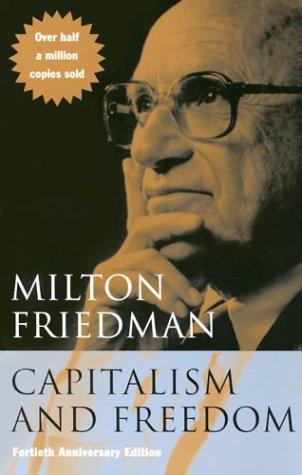
Capitalism and Freedom
Milton Friedman · 1962
Friedman’s programme: economic freedom as a precondition for political freedom.
The Road to Serfdom
Friedrich A. von Hayek · 1944
Hayek’s warning: central economic planning endangers freedom.

09Frequently asked questions
What is monetarism in simple terms?
The doctrine that in the long run the money supply determines the price level. Central banks should therefore ensure steady, not overly fast, growth of the money supply instead of using monetary policy to steer the business cycle in the short term.
What is supply-side economics?
Economic policy that aims to create growth through better conditions for production: lower taxes, less regulation, more flexible markets, privatisation.
What is the difference between Keynesianism and monetarism?
Keynesians rely on government demand management against crises. Monetarists consider this ineffective or inflationary in the long run and rely on stable money and reliable rules.
What was Reaganomics?
Ronald Reagan’s economic policy: significant tax cuts, deregulation and support for the Fed’s tough anti-inflation policy, alongside rising military spending and budget deficits.
Is monetarism still valid today?
Not as a strict money supply rule. But its core lessons live on: inflation is the central bank’s job, expectations and credibility matter, and central banks should be independent.
What did Thatcher and Reagan stand for in economic policy?
Fighting inflation, tax cuts, deregulation and privatisation, drawing on the ideas of Milton Friedman and Friedrich von Hayek.
+More schools of thought
Last updated: 25 November 2026. Carefully researched, but without guarantee. Not legal, tax or investment advice. Disclaimer