Executive briefings
Books in board format
Each briefing takes five minutes to read: the book in one minute, three core ideas, what a board can do with it, where its limits lie, and a question for your next client conversation.
01The Crux
In one minute
Strategy is not a list of goals but the solution to the most important problem you can actually solve. Rumelt calls it “the crux”: the challenge that matters most and where you can realistically make progress. Good strategy starts with an honest diagnosis, not with visions and targets.
Three core ideas
- Diagnosis before goals. Many strategy papers jump straight to ambitions and KPIs. Rumelt first demands a clear answer to the question of what is actually going on and why.
- Find the crux. Among many challenges, one is usually both decisive and addressable. If you focus your energy there, you achieve more than with twenty initiatives running in parallel.
- Goals are not a strategy. A collection of goals does not tell you how to reach them. Rumelt explicitly criticises strategy processes that do nothing but cascade targets.
What boards can do with it
- In the next strategy workshop, set aside one hour purely for diagnosis, without talking about measures.
- Check every initiative for whether it contributes to the most important problem. Cut or postpone the rest.
Limits: Rumelt offers a way of thinking, not a method with fixed steps. If you are looking for a process model, you have to build it yourself.
Conversation opener: “If you could solve only one problem in the next two years, which would it be?”
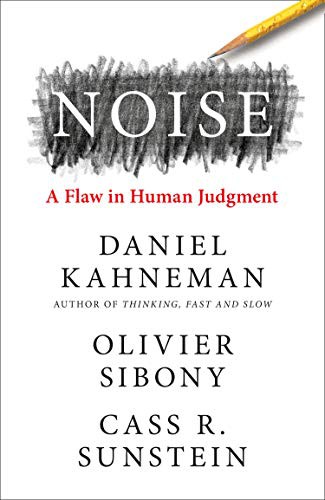
02Noise
In one minute
Alongside systematic distortions (bias), there is a second, often overlooked error: noise. This means the random variability of judgements that ought to be identical, for example when different assessors rate the same case very differently. The authors show that this variability in organisations is far greater than executives assume.
Three core ideas
- Measure noise. In a “noise audit”, several experts receive the same case and judge it independently. The differences show how much chance there is in decisions.
- Decision hygiene. Break judgements down into components, gather them independently, discuss only afterwards, and use relative rather than absolute ratings.
- Rules and algorithms. Simple rules and models are often less noisy than human judgements, even if they are not smarter.
What boards can do with it
- Run a noise audit in lending, recruitment or investment approvals.
- In committees, collect individual judgements in writing before the discussion starts.
Limits: Some critics consider the concept less new than the book suggests. And not all variability is bad: in innovation, a diversity of judgements is desirable.
Conversation opener: “How different would your investment decisions be if another committee reviewed the same proposals?”
03Radical Uncertainty
In one minute
John Kay and Mervyn King, a former Governor of the Bank of England, argue that many important decisions are made under radical uncertainty: you know neither all the possible outcomes nor their probabilities. Anyone who nevertheless calculates with seemingly exact probabilities is faking precision.
Three core ideas
- What is going on here?. The most important task before any decision is to understand the situation, not to run a model.
- Narratives instead of false precision. People make decisions with the help of narratives about the situation. Good decision-makers examine these narratives critically instead of replacing them with numbers.
- Robust and resilient. Instead of searching for the one optimal solution, you should choose strategies that work across many possible futures.
What boards can do with it
- In business cases, distinguish openly between calculable risks and genuine uncertainty.
- Instead of a single point forecast, develop several scenarios, each with its own narrative.
Limits: The book is stronger on critique than on practical tools. If you are looking for methods, combine it with scenario planning.
Conversation opener: “Which assumption in your plan looks more precise than it can really be?”
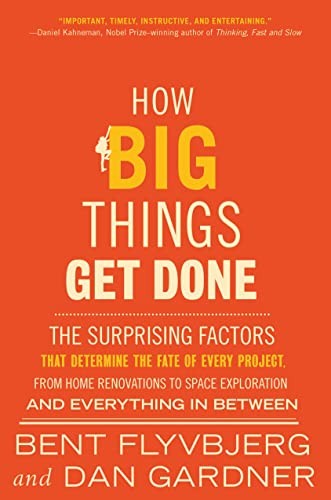
04How Big Things Get Done
In one minute
Bent Flyvbjerg has analysed a large database of major projects. His finding: the vast majority overrun their budget or schedule, and only a very small share deliver cost, time and benefits as planned. The reasons are less technical than human: acting too fast, planning too optimistically, too much uniqueness.
Three core ideas
- Think slow, act fast. Planning is cheap, delivery is expensive. If you are thorough in planning, you shorten the risky delivery phase.
- Reference class forecasting. Do not start from the special features of your own project but from the actual results of comparable projects, and then adjust.
- Modularity. Projects made up of many identical, repeatable parts succeed more often than one-off builds.
What boards can do with it
- For every major investment, require the track record of comparable projects as the starting point for planning.
- Ask which part of the project can be designed to be modular and repeatable.
Limits: The data come mainly from infrastructure and IT. For strategic initiatives without a clear end point, the lessons are transferable but less well evidenced.
Conversation opener: “How long did comparable projects elsewhere actually take, not on paper, but in reality?”
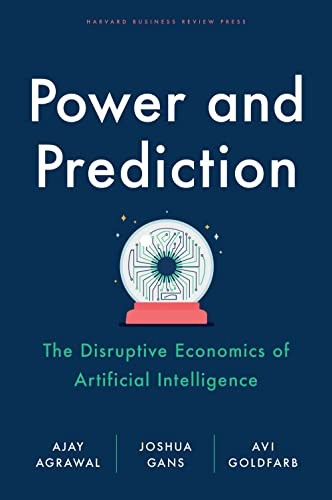
05Power and Prediction
In one minute
At its core, AI is a technology for predictions that keep getting cheaper. According to the three Toronto economists, however, the big effect comes not from automating individual tasks but from rebuilding entire systems around better predictions. That shifts power within organisations and industries.
Three core ideas
- Point, application and system solutions. A point solution replaces a prediction within an existing process. A system solution rebuilds processes, decision rights and the business model. The greatest value usually lies in the latter.
- The Between Times. We are in a phase in which the technology exists but the systems have not yet adapted. As with the electrification of factories, this takes years.
- Power shifts. Whoever controls the prediction gains influence. This applies between departments as much as between companies in an industry.
What boards can do with it
- Sort AI portfolios by whether they are point solutions or system redesigns.
- Ask which decision rules in the company exist only because predicting used to be difficult.
Limits: The book was written before the breakthrough of large language models. The logic holds, but some of the examples are dated.
Conversation opener: “Which of your rules exist only because you could not previously predict what would happen?”
06Co-Intelligence
In one minute
Ethan Mollick, a professor at the Wharton School, describes how people should work with generative AI: not as a tool you introduce once, but as a co-worker whose strengths and weaknesses you get to know by experimenting. His guiding idea is a “jagged frontier”: AI is surprisingly good at some tasks and surprisingly poor at seemingly similar ones.
Three core ideas
- Experiment. Invite AI into as many tasks as possible to find out where it helps. The frontier cannot be mapped in advance from your desk.
- Human in the loop. The human remains responsible and checks the output. If you accept it blindly, you make mistakes that are hard to spot.
- Today’s AI is the worst you will use. Mollick advises assuming that today’s AI is the weakest you will ever use, and planning strategies accordingly.
What boards can do with it
- Have executives work with AI themselves on a regular basis instead of delegating the topic to IT.
- Design pilot projects so that they show systematically where the frontier lies for your own business.
Limits: The book is strong on mindset and examples but thin on governance, data protection and organisation. For those, you need additional sources.
Conversation opener: “On which task did AI last surprise you, positively or negatively?”
07Strategy Beyond the Hockey Stick
In one minute
Three McKinsey partners analysed the economic profits of thousands of large companies. The result: the distribution is extremely unequal, and most strategic plans promise a hockey-stick curve that rarely materialises. If you really want to improve your position, you need a few big moves, made more decisively than your competitors make theirs.
Three core ideas
- The power curve. A small share of companies generates most of the economic profit. Most sit in the middle and stay there.
- Hockey-stick plans. Plans often show a dip followed by a steep rise. Reality seldom follows, because the assumptions about one’s own strength are too optimistic.
- Big moves. The authors name moves associated with moving up: programmatic acquisitions, dynamic reallocation of resources, strong capital investment, productivity improvements and differentiation.
What boards can do with it
- Compare the current strategic plan with the track record of the last three plans: how much of the promised rise actually materialised?
- Check how much budget is really reallocated between business units each year.
Limits: The analysis describes correlations, not proven causes. And it is based on large companies; for mid-sized firms, the patterns are less well evidenced.
Conversation opener: “How much of your budget actually moved between units last year?”
How to cite this page
APA (7th edition)
Benchreads. (2026). Executive briefings: management books in board format. Retrieved 25 November 2026, from https://benchreads.com/en/executive-briefings/
Benchreads is a secondary source. For academic work, also cite the original sources named in the text. You are welcome to link to this page in course materials.
Last updated: 25 November 2026. Carefully researched, but without guarantee. Not legal, tax or investment advice. Disclaimer