School of thought · from 1936
Keynesianism
The state stabilises demand when the private sector falls short.
Keynesianism is economics’ answer to the Great Depression. Its core message: a market economy can get stuck in a situation where factories stand idle and people want to work, but nobody is buying. Then the state has to replace the missing demand. Almost every stimulus programme since 1945, from Karl Schiller’s “global steering” to the coronavirus aid packages, follows this logic. If you want to understand economic policy in a crisis and explain it to clients, there is no way around Keynes.
01How the idea emerged
Until the 1930s, economics held to a simple idea, Say’s law: supply creates its own demand. Whoever produces earns income and spends it again. Accordingly, there could only be lasting unemployment if wages were too high. If they fall, companies hire again.
The Great Depression from 1929 refuted this in practice. In the US, roughly one in four workers was unemployed in 1933, and in Germany more than six million people were registered as unemployed in early 1932. Wages and prices fell, but employment did not return. Reich Chancellor Heinrich Brüning responded with a harsh austerity course and so made the downward spiral worse.
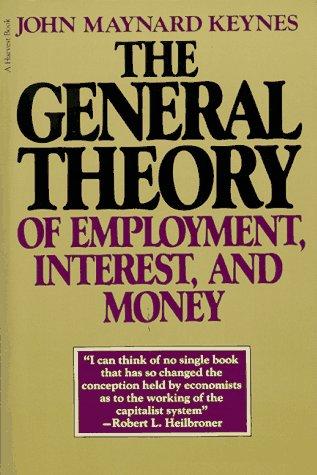
John Maynard Keynes, a Cambridge economist and adviser to the British government, published “The General Theory of Employment, Interest and Money” in 1936. His argument: what an economy produces depends on aggregate demand. If households save out of fear and companies do not invest out of pessimism, demand falls, and with it production, and with it incomes, and with it demand once again. The economy can remain stuck in an equilibrium with high unemployment. Lower wages do not help then; they only reduce purchasing power further.
After 1945, Keynesianism became the prevailing doctrine in the West. Governments explicitly took on responsibility for full employment. In Germany it arrived comparatively late, with the Federal Republic’s first recession in 1966/67 and Economics Minister Karl Schiller.
“Practical men, who believe themselves to be quite exempt from any intellectual influences, are usually the slaves of some defunct economist.”
John Maynard Keynes, 1936 · Source and meaning
02Timeline
- 1929
Stock market crash in New York, start of the Great Depression.
- 1930–1932
Brüning’s austerity policy in Germany, unemployment above six million.
- 1933
Franklin D. Roosevelt launches the New Deal.
- 1936
Keynes publishes the “General Theory”.
- 1944
Bretton Woods conference, Keynes negotiates for Britain.
- 1967
Stability and Growth Act in Germany, Schiller’s “global steering”.
- 1970s
Stagflation: high inflation and high unemployment at the same time. Keynesianism loses its interpretive dominance.
- 2008/09
Financial crisis: stimulus packages worldwide, in Germany a car scrappage bonus and an expansion of short-time work (Kurzarbeit).
- 2020
Coronavirus pandemic: stimulus package of 130 billion euros, temporary cut in VAT.
- 2025
Amendment to the Basic Law (Grundgesetz) for a special infrastructure fund (Sondervermögen) of 500 billion euros.
03How it works
At the centre is aggregate demand: household consumption, business investment, government spending and net exports. If one of these drops away, for example because companies postpone their investments in a crisis, demand is missing. According to Keynes, markets do not correct this on their own quickly enough, because wages are sticky downwards and because falling prices can even make things worse: if you know everything will be cheaper tomorrow, you do not buy today.
This is where the state comes in. It can spend money itself (roads, schools, programmes), cut taxes or increase transfers. The key is the multiplier: if the state puts a billion into construction contracts, the construction firms pay wages, the employees go shopping, the retailers reorder. In the end, economic output can rise by more than the original billion. By how much is disputed and depends on the situation. In a deep crisis with zero interest rates the effect is larger than at full employment.
Monetary policy can also help by cutting interest rates. But Keynes saw a limit: the liquidity trap. When interest rates are already close to zero and everyone is pessimistic, people prefer to hoard money rather than invest. Then cheap money has hardly any effect, and fiscal policy has to step in. Exactly this situation shaped the years after 2008.
Important and often forgotten: Keynes thought countercyclically. In a crisis the state should run deficits, in an upswing surpluses, to bring debt back down and to stop the economy overheating. In practice, the second part was usually politically harder than the first.
04Key terms you must be able to explain
- Effective demand
Demand actually backed by purchasing power. It determines how much is produced and how many people are employed.
- Multiplier
An additional expenditure generates, through follow-on spending, more economic output than its own amount. The more of each additional euro is spent again, the greater the effect.
- Liquidity trap
With interest rates close to zero, monetary policy has hardly any effect, because people hold money instead of investing.
- Paradox of thrift
If everyone saves more at the same time in a crisis, incomes fall, and in the end no more is saved overall.
- Animal spirits
Keynes’s term for the moods and instincts that drive investment. Investment depends less on exact calculations than on confidence.
- Automatic stabilisers
Unemployment benefit, short-time work and progressive taxes support demand in a crisis without parliament having to pass anything.
05Variants and later developments
- Neoclassical synthesis
John Hicks (IS-LM model, 1937) and Paul Samuelson combined Keynes with classical theory: Keynesian in the short run, classical in the long run. This model shaped the textbooks until the 1970s.
- New Keynesianism
Since the 1980s, economists have given sticky prices and wages a microeconomic foundation, for example through adjustment costs and contracts. Today’s inflation-targeting monetary policy of central banks rests heavily on New Keynesian models.
- Post-Keynesianism
Joan Robinson, Hyman Minsky and others emphasise uncertainty, distribution and the instability of financial markets. Minsky’s thesis that long periods of stability lead to risky borrowing was widely cited after 2008.
06Critique and opposing views
- Monetarism (Milton Friedman)
Government demand management only works briefly and in the long run creates inflation. The stagflation of the 1970s seemed to confirm this.
- New classical macroeconomics (Robert Lucas)
People see through policy and adjust their expectations. What worked in historical data can change as soon as it becomes the rule (Lucas critique, 1976).
- Public choice
Politicians like to run deficits in a crisis, but rarely run surpluses in an upswing. The result is permanently rising government debt.
- Practice
Programmes often come too late, because legislation and implementation take time. And large packages poured into a recovering economy can fuel inflation, as the debate after 2021 showed.
07Practical examples
- 1967Schiller’s global steering
After the Federal Republic’s first recession, the Stability and Growth Act committed the federal government and the states to the “magic square”. Two stimulus programmes and the “Concerted Action” (Konzertierte Aktion) with trade unions and employers followed, and the economy recovered quickly.
- 2008/09Financial crisis
Germany launched two stimulus packages, with a scrappage bonus for old cars and a massive expansion of short-time work. Despite economic output slumping by around five per cent, unemployment rose only slightly.
- 2020Coronavirus aid
Short-time work for millions of employees, bridging aid and a temporary cut in VAT. The US went even further with several trillion dollars, followed by a debate about inflation from 2021.
Politicians who stood for it
- Karl SchillerGerman Federal Minister of Economics 1966–1972
Stability and Growth Act 1967 (“global steering”, the magic square)
- Franklin D. RooseveltUS President 1933–1945
New Deal; began before the General Theory, but is seen as an early example of demand-supporting policy
08What this means for you as a consultant
- 01
Read stimulus programmes. For every package, ask: which industries get the money first? Construction, energy, defence and rail benefit from the special fund differently from consumer goods. Demand forecasts and capacity plans follow from this.
- 02
Build recession scenarios honestly. A good downside scenario models not only the slump in demand but also the countervailing forces: short-time work, support programmes, interest rate cuts. Otherwise it is too pessimistic and leads to excessive cuts.
- 03
Short-time work as a capacity tool. If you retain skilled workers in a crisis instead of laying them off, you are faster in the upswing. Weigh the cost of short-time work against the cost of rehiring and onboarding.
- 04
Measure sentiment. Animal spirits can be measured: the ifo Business Climate Index, purchasing managers’ indices, incoming orders. They often run ahead of your client’s investment decisions.
+Further reading
The General Theory of Employment, Interest and Money
John Maynard Keynes · 1936
The answer to the Great Depression: demand determines employment.
09Frequently asked questions
What is Keynesianism in simple terms?
The idea that in a crisis the state should replace missing demand through spending or tax cuts, so that production and employment do not collapse. In an upswing, it should do the reverse and save.
What is the multiplier effect?
An additional government expenditure generates, through incomes and follow-on purchases, more economic output than its own amount. How large the effect is depends on the economic situation and is disputed empirically.
Which German politician stands for Keynesianism?
Karl Schiller (SPD), German Federal Minister of Economics from 1966. In 1967 he pushed through the Stability and Growth Act, which is still in force today.
What are the four goals of the magic square?
Price level stability, a high level of employment, external economic balance and steady, appropriate economic growth. “Magic” because not all four can be achieved at the same time.
Why did Keynesianism fall into crisis in the 1970s?
Because inflation and unemployment rose at the same time (stagflation). More demand would have worsened inflation, less demand would have worsened unemployment. The model had no good answer to this, and monetarism and supply-side economics gained influence.
+More schools of thought
Last updated: 25 November 2026. Carefully researched, but without guarantee. Not legal, tax or investment advice. Disclaimer