Benchreads

Duel

Porter

Michael E. Porter · b. 1947


Christensen

Clayton M. Christensen · 1952–2020

The question

Who wins: the company that holds the best position in an industry, or the one that reinvents the industry from below?

Both taught at Harvard Business School, and both shaped generations of consultants. Porter explains why some companies in stable industries earn more over the long term. Christensen explains why well-run market leaders, of all companies, suddenly lose. The two theories contradict each other less than it seems. They answer different questions.

Professor, Harvard Business School

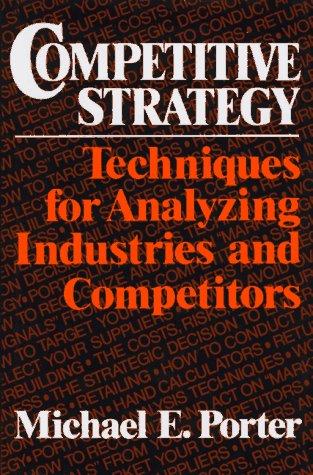
Michael E. Porter

  1. The profitability of an industry depends on five competitive forces.
  2. A company needs a clear position: cost leadership, differentiation or focus.
  3. Strategy means deliberately choosing what not to do. If you are stuck in the middle, you lose.

ToolsFive Forces, generic strategies, value chain

Use Porter when …When the industry is stable, the rules of the game are known and the question is: where and how do we position ourselves?

Professor, Harvard Business School

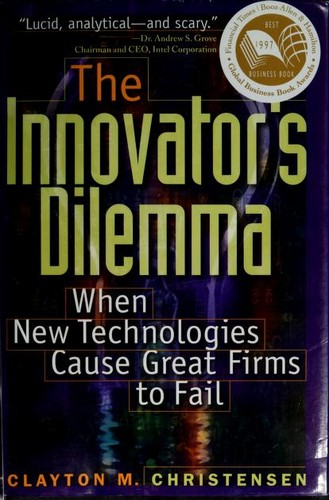
Clayton M. Christensen

  1. Market leaders fail not despite good management but because of it. They listen to their best customers.
  2. Disruptive attackers start with simpler, cheaper offerings at the bottom of the market or with non-customers.
  3. If you want to attack yourself, you need a separate unit with its own cost structure.

ToolsDisruption theory, Jobs to be Done

Use Christensen when …When a cheaper, simpler attacker appears, or when technology improves faster than customer requirements.
The takeaway for consultants

Porter describes the playing field, Christensen the moment it gets rebuilt. In a project you need both: the Five Forces show how attractive today’s market is. Disruption theory shows whether that attractiveness has a sell-by date. A strong position in an industry that is being rolled up from below is a weak position.

How to use both in a project

  1. 01

    In every market analysis, do the Five Forces first and then ask explicitly: who is serving our non-customers and our least profitable customers?

  2. 02

    In the portfolio, separate the question “How do we win in the core?” (Porter) from “How do we attack ourselves?” (Christensen). They need different teams and different KPIs.

  3. 03

    Assess attackers not only on quality but on their rate of improvement. A worse product that is getting better quickly is more dangerous than a good one that is standing still.

The line for the meeting

“The analysis shows our position is strong. The question is whether this will still be the same industry in five years.”

The books behind it

Frequently asked questions

What is the difference between Porter and Christensen?

Porter explains competitive advantage through industry structure and positioning. Christensen explains how established companies are displaced by simpler, cheaper attackers. Porter answers “Where do we position ourselves?”, Christensen “When does the playing field change?”.

Does Christensen disprove Porter?

No. The two theories complement each other. The Five Forces analyse a market at one point in time, while disruption theory describes how markets shift.

DuelTaleb vs. KahnemanDo we decide badly because our minds make mistakes, or because the world cannot be predicted?DuelFriedman vs. FreemanWho does a company owe its obligations to: its owners, or everyone it affects? DuelKeynes vs. HayekState or market in a crisis?

Last updated: 25 November 2026. Carefully researched, but without guarantee. Not legal, tax or investment advice. Disclaimer