Benchreads

Duel

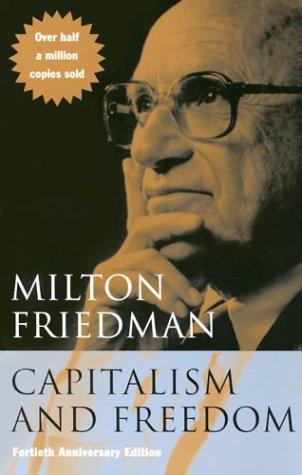
Friedman

Milton Friedman · 1912–2006


Freeman

R. Edward Freeman · b. 1951

The question

Who does a company owe its obligations to: its owners, or everyone it affects?

In 1970, Milton Friedman published an essay in the New York Times Magazine arguing that the social responsibility of a business is to increase its profits. In 1984, R. Edward Freeman laid the foundation of stakeholder theory with his book on strategic management. In 2019, the Business Roundtable, an association of large US companies, declared that companies serve all their stakeholders. So the debate is not academic: it shapes pay systems, reporting obligations and capital markets.

Economist, Nobel Prize in Economic Sciences 1976

Milton Friedman

  1. Managers are agents of the owners. If they pursue social goals with the owners’ money, they are spending someone else’s money.
  2. Pursuing profit within the rules of the game, that is without deception or fraud, is the task of the business.
  3. Social goals are a matter for politics and for the owners themselves, not for management.

ToolsClear objective function, principal-agent logic, cost of capital as the benchmark

Use Friedman when …When goals become diluted, investments are waved through without any expected return, or it is unclear to whom management is accountable.
Professor, Darden School of Business, University of Virginia

R. Edward Freeman

  1. A company is a network of relationships with customers, employees, suppliers, providers of capital and communities.
  2. Long-term success comes when management balances the interests of these groups instead of maximising one of them.
  3. Ethics and strategy cannot be separated.

ToolsStakeholder analysis, materiality assessment, purpose

Use Freeman when …When the licence to operate, reputation, regulation or skilled staff decide success, that is, when other groups can block or enable the business.

The takeaway for consultants

The contrast is smaller than it sounds. Friedman, too, demands that you stick to the rules of the game, and many stakeholder measures pay off in company value over the long term. The real difference shows up in a conflict: when a measure reduces profit and benefits another group, who decides, and by what standard? For consultants the debate is practical: a target system that weights all interests equally is not a target system. One that knows only quarterly profit overlooks risks that become visible only years later.

How to use both in a project

  1. 01

    For every strategy, ask: which stakeholders can block it, and what does it cost to win them over? That is Freeman as risk analysis.

  2. 02

    Insist that every sustainability or purpose initiative has a rationale the CFO understands. That is Friedman’s discipline.

  3. 03

    In target systems, separate constraints (what we never do) from target metrics (what we maximise). That makes conflicts decidable.

The line for the meeting

“Who are we actually optimising for here, and what happens when these groups contradict each other?”

The books behind it

Frequently asked questions

What did Milton Friedman say about corporate responsibility?

In his essay in the New York Times Magazine of September 1970, Friedman argued that the social responsibility of a business is to increase its profits, as long as it stays within the rules of the game, that is, open and free competition without deception or fraud.

What is stakeholder theory?

Stakeholder theory, shaped largely by R. Edward Freeman (1984), sees a company as a web of relationships with all the groups that influence it or are influenced by it. Management should balance their interests instead of only maximising profit for the owners.

DuelPorter vs. ChristensenWho wins: the company that holds the best position in an industry, or the one that reinvents the industry from below?DuelTaleb vs. KahnemanDo we decide badly because our minds make mistakes, or because the world cannot be predicted? DuelKeynes vs. HayekState or market in a crisis?

Last updated: 25 November 2026. Carefully researched, but without guarantee. Not legal, tax or investment advice. Disclaimer