Practice area 10/10
Risk management and resilience
Identifying, assessing and managing risks before they tear the plan apart: enterprise risk management, scenarios, stress tests and robust supply chains.
- 3Client questions
- 4Frameworks
- 3Moves
- 8Books
What the client asks you
- “Which risks could seriously harm us over the next three years, and are we prepared for them?”
- “How dependent are we on individual suppliers, countries or customers?”
- “Does our risk management meet the requirements of the supervisory board, the auditor and the law?”
What you need to master
- 01
Enterprise risk management under COSO ERM (2017) and ISO 31000 (2018): risk as part of strategy and management, not a compliance list.
- 02
The legal framework in Germany: a duty to have a risk early-warning system since the Corporate Control and Transparency Act (KonTraG) of 1998, and since the Financial Market Integrity Strengthening Act (FISG) of 2021, for listed companies, an appropriate and effective internal control and risk management system (Section 91 of the German Stock Corporation Act, AktG).
- 03
The IIA’s Three Lines Model (2020): operational responsibility, risk and compliance function, internal audit, with clear roles in relation to the management board and supervisory board.
- 04
Scenario analysis and stress tests: modelling not only the most likely cases, but the ones that would put the company at risk.
- 05
The difference between risk (probabilities known) and true uncertainty (not known), and why extreme events must be managed differently from everyday risks.
The frameworks
The tools everyone on the team masters in this field.
- Risk inventory and assessment
Risks with cause, effect, probability, size of loss and owner, condensed into the top risks for the management board.
- Scenarios and stress test
A few clearly different scenarios plus one extreme scenario, modelled all the way through to liquidity and covenants.
- Three Lines Model
Who owns the risk, who monitors it, who reviews it independently. Prevents gaps and duplicated work.
- Supply chain mapping
Make dependencies visible down to the second and third tier of suppliers, with bottlenecks and alternatives.
How to play it in a project
- 01
Ask first about risk-bearing capacity: how much loss or cash outflow can the company withstand before its existence is threatened? Every individual risk is measured against that.
- 02
Separate everyday risks, which you manage with processes, from ruin risks, which you must avoid or hedge, however unlikely they seem.
- 03
Link the risk register to planning: every major planning assumption gets a named risk, an early indicator and a plan B.
How the board spots a beginner
- Colourful heatmaps with gut-feel probabilities that create a false sense of certainty but change no decision.
- Calculating averages and expected values where a single extreme case can finish the company.
- Treating risk management as a department instead of leaving responsibility with the business units.
The classics
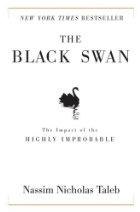
All booksThe Black Swan
Nassim Nicholas Taleb · 2007
Rare, high-impact events and why forecasts systematically miss them.
Radical Uncertainty
John Kay, Mervyn King · 2020
A former Governor of the Bank of England and an economist on decisions where probabilities cannot be meaningfully calculated.
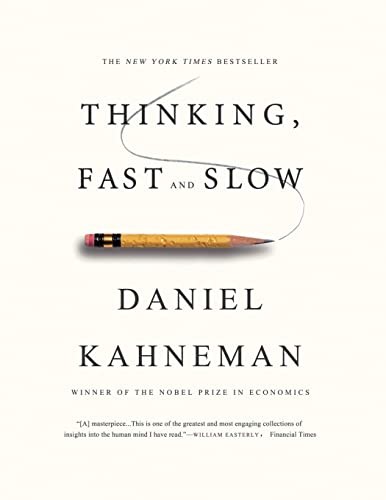
Thinking, Fast and Slow
Daniel Kahneman · 2011
How System 1 and System 2 shape our judgement, and the thinking errors that follow.
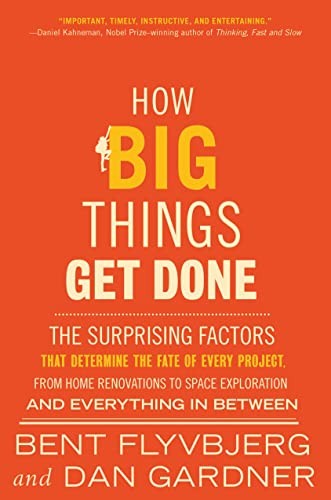
How Big Things Get Done
Bent Flyvbjerg, Dan Gardner · 2023
Why big projects almost always end up over budget and late, and what the few successful ones do differently.
Specialist reading
- Against the Gods: The Remarkable Story of RiskPeter L. Bernstein · 1996View on Amazon
- The Failure of Risk ManagementDouglas W. Hubbard · 2009View on Amazon
- AntifragileNassim Nicholas Taleb · 2012View on Amazon
- SuperforecastingPhilip E. Tetlock, Dan Gardner · 2015View on Amazon
Frequently asked questions
What does a consultant do in risk management?
They help to identify and assess a company’s key risks, build or review a risk management system, model scenarios and stress tests, and make supply chains or business models more robust.
What is enterprise risk management (ERM)?
A company-wide approach to identifying, assessing and managing risks systematically while linking them to strategy and planning. The best-known frameworks are COSO ERM and ISO 31000.
What is the difference between COSO ERM and ISO 31000?
COSO ERM comes from the US audit and control world and is strongly geared to governance and reporting. ISO 31000 is an international standard with general guidelines that suits organisations of any size. Many companies combine the two.
Is risk management mandatory in Germany?
For stock corporations (AG), yes. Under Section 91(2) of the German Stock Corporation Act (AktG), the management board must set up a risk early-warning system, and since the FISG of 2021 listed companies also need an appropriate and effective internal control and risk management system. For GmbHs, a corresponding duty is derived from the general duty of care of the managing directors.
What is the Three Lines Model?
A model published by the Institute of Internal Auditors in 2020 that organises roles in risk management: operational units as the first line, risk and compliance functions as the second, and internal audit as the independent third line.
More practice areas
All areasLast updated: 25 November 2026. Carefully researched, but without guarantee. Not legal, tax or investment advice. Disclaimer